

Surveying basic research and original innovation
On the afternoon of May 8, Beijing Party Secretary Yin Li visited Haidian District for a survey focused on strengthening basic research. He called for Beijing to use the Beijing–Tianjin–Hebei International Science and Technology Innovation Center as a driver, draw on the capital’s strengths in education, science, technology, and talent, and improve original innovation. He said Haidian should make basic research a priority, identify areas where it can lead, and work to become a world-class source of original innovation. Hou Jianguo, Party Secretary and President of the Chinese Academy of Sciences, separately joined the survey.
Reporting progress in joint quantum-computing research
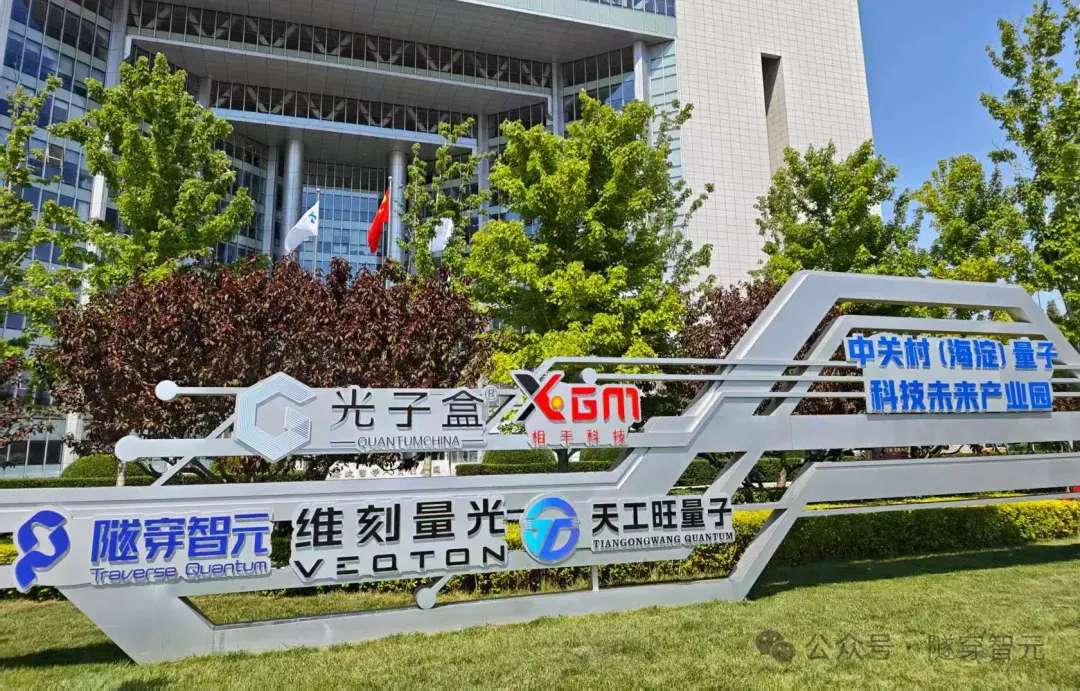
The delegation visited the Zhongguancun Quantum Technology Incubator to review basic-research results from resident companies and meet quantum-technology enterprises.
Tsinghua University tenured associate professor Chen Jianxin participated as a representative and briefed the delegation on recent progress by the joint Tsinghua University and Traverse Quantum research team, including key advances in quantum instruction sets and real-time decoding.
Yin Li called for greater investment in basic research and leadership in important areas of strength. He encouraged leading companies to use the incubator’s concentration of resources to support collaboration among industry, universities, and research institutes and to explore new directions at the intersection of quantum technology, artificial intelligence, and biomedicine.
Strengthening strategic capabilities and talent
During the survey, Yin Li noted that a new round of scientific and industrial change is accelerating and that basic research has an increasingly strategic and leading role. He called for stronger national strategic science and technology capabilities, organized research among national laboratories, key laboratories, new research institutions, research universities, and technology companies across the Beijing–Tianjin–Hebei region, and better links among basic research, application development, and technology transfer.
He also called for stronger basic disciplines at universities, cultivation of urgently needed and outstanding innovative talent, closer coordination between education and research, and support for scientists and innovation teams. He encouraged diversified investment in basic research, evaluation and incentive systems suited to long research cycles, greater use of artificial intelligence in scientific research, and an open environment that tolerates failure and supports work at the frontier.
Deepening international basic-research cooperation
Yin Li called for broader international exchange and cooperation in basic research, deeper participation in global innovation networks, and better use of international platforms such as the Zhongguancun Forum. He encouraged international science programs and facilities addressing climate change, energy, the environment, and health, as well as the establishment of international science organizations and high-level academic conferences in Beijing.
Beijing municipal leaders Jin Wei and Zhao Lei participated in the survey.